
What a 10% US Tariff Could Mean for UK SMEs
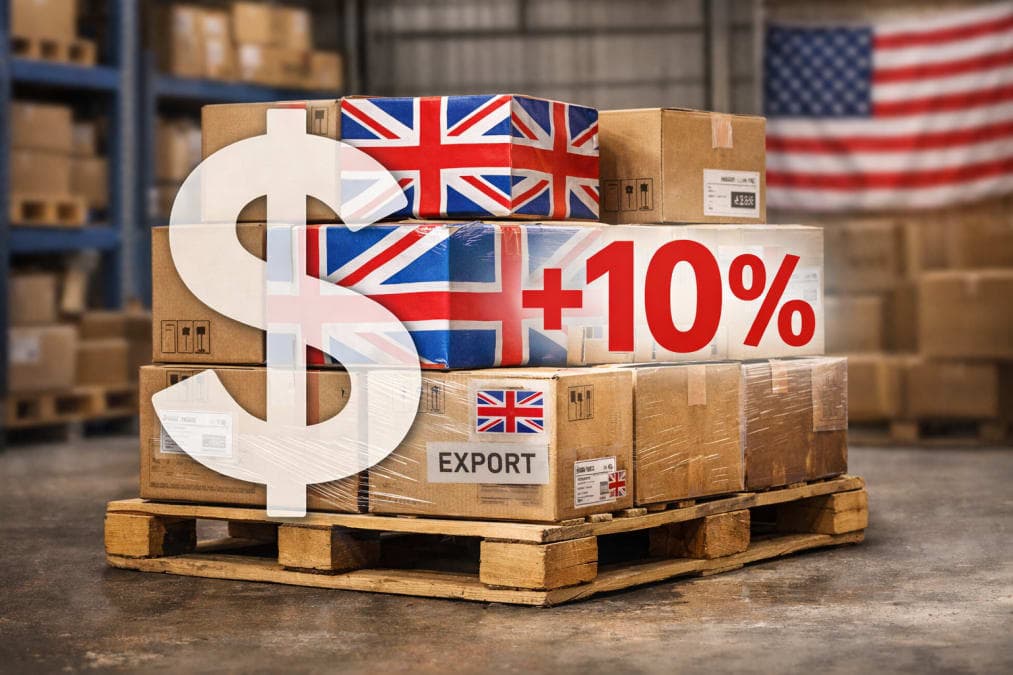

A proposed 10 per cent tariff on UK goods exported to the United States is raising concerns across the business community, particularly among small and medium-sized enterprises that depend on international trade. While tariffs are often discussed at a macroeconomic level, their real impact is likely to be felt most acutely by smaller businesses with tighter margins and less flexibility to absorb sudden cost increases.
A tariff is essentially a tax placed on imported goods. If the US introduces a blanket 10 per cent tariff on UK exports, British products entering the American market would become more expensive overnight. In most cases, the cost would either be passed on to US customers through higher prices or absorbed by UK exporters through reduced profit margins.
For UK SMEs that sell goods to the US, this presents an immediate challenge. Many small exporters compete on price and quality in highly competitive markets. A 10 per cent increase can make UK products less attractive compared to domestic US suppliers or exporters from countries not affected by the tariff. For smaller firms without the scale or financial buffers of larger corporations, this could result in lost orders or the need to renegotiate contracts.
The impact would not be limited to exporters alone. SMEs that form part of UK–US supply chains could also be affected, even if they do not sell directly to American customers. Manufacturers supplying components, packaging or specialist services to exporting businesses may see demand slow if orders decline further down the chain.
From a UK-wide perspective, the introduction of tariffs would add another layer of uncertainty at a time when many SMEs are already navigating rising costs, labour pressures and cautious consumer spending. While the services sector may be less directly exposed, goods-producing industries such as manufacturing, food and drink, and specialist retail are more vulnerable to trade barriers.
There are also broader implications for business planning. Uncertainty around trade policy makes it harder for SMEs to invest, hire or expand into new markets. Smaller firms often lack dedicated trade or legal teams, meaning they must rely on external advisers or industry bodies to interpret fast-changing international rules.
Some SMEs may look to respond by diversifying export markets, adjusting pricing strategies or exploring partnerships closer to home. However, these changes take time and resources, both of which are often in short supply for small businesses.
While discussions around tariffs continue at a political level, the situation highlights how global trade decisions can have direct and immediate consequences for SMEs. For many UK small businesses, the challenge will be staying agile, informed and prepared in an increasingly unpredictable international trading environment.
About the Author
This is Small and Medium Enterprises News Official News Desk